Straight Poison in the Air: New Global Report Shows 97% of Cities Are Choking on Dirty Smog, No Cap
They changed the rules on what is safe to breathe, and now almost every single block on the map is failing the test.
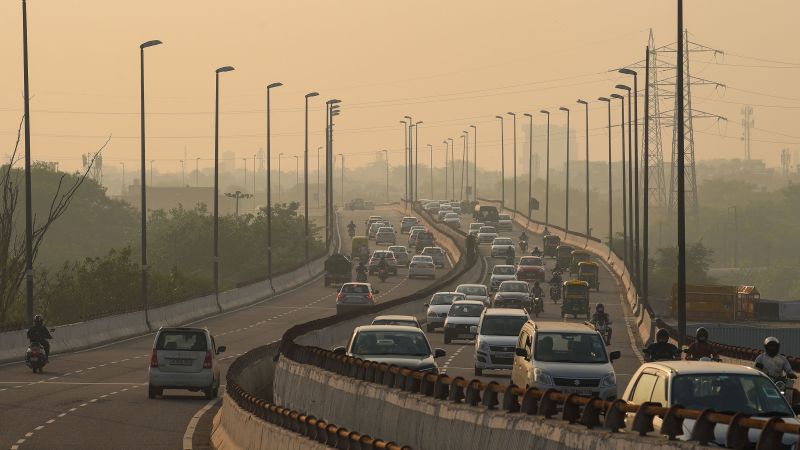
Look, we gotta talk about what we are actually breathing out here, because the latest global air quality report from IQAir is showing some wild stats. According to their 2021 data, air pollution is spiking hard all over the globe, and it is hitting unhealthy levels that regular folks have to deal with every day. The report found that average annual air pollution in every single country—and 97 percent of the cities they looked at—failed to meet the World Health Organization's safety guidelines.
To put it in perspective, out of 6,475 cities analyzed across 117 countries and territories, only 222 cities actually had clean enough air to meet the WHO standard. That means almost the entire map is failing. If you want to breathe truly clean air according to these high-up officials, you basically have to move to the French territory of New Caledonia, or US territories like Puerto Rico and the US Virgin Islands. For everyone else living in real-world urban areas, the air is officially a hazard.
They basically changed the whole game in September 2021 when the WHO updated their annual guidelines. They halved the acceptable amount of fine particulate matter, which is called PM2.5, dropping the limit from 10 down to 5 micrograms per cubic meter. This sudden change in the rules is the main reason why almost every city on Earth is suddenly in the red zone, leaving local governments scrambling to keep up.
Let’s talk about PM2.5, because this microscopic stuff is no joke. It is the tiniest pollutant out there, but it is also the most dangerous. When you breathe it in, it goes way deep into your lung tissue and slips straight into your bloodstream. It comes from everyday things like burning fossil fuels, but also from dust storms and heavy wildfires. Once it is in your system, it is linked to serious health threats like asthma, heart disease, and respiratory illnesses that keep people sick.
This is not just some numbers game; it is a matter of life and death on the streets. Back in 2016, the WHO says about 4.2 million premature deaths were tied to PM2.5 pollution. They also calculated that if these strict new 2021 rules had been active and met back in 2016, nearly 3.3 million people would have saved their lives. That shows you just how deadly this dirty air really is.
When you look at the global map, the inequality is crazy. South Asian nations like India, Pakistan, and Bangladesh are getting hit the worst, with air pollution levels exceeding the safety guidelines by at least ten times. On the flip side, wealthy spots like the Scandinavian countries, Australia, Canada, Japan, and the UK are breathing much easier, only exceeding the limits by one to two times.
Over here in the US, things are slipping too. Air pollution in 2021 jumped up compared to 2020, exceeding the WHO guidelines by two to three times. Out of more than 2,400 US cities they checked, Los Angeles is still holding the crown for the absolute dirtiest air in the country, even though they managed a 6 percent decrease compared to 2020. Meanwhile, other major cities like Atlanta and Minneapolis saw major spikes in dirty air.
According to the authors of the report, this US pollution is getting worse because of a few major issues: our heavy reliance on fossil fuels, wildfires getting more severe, and politicians constantly messing with the enforcement of the Clean Air Act every time a new administration takes over. When enforcement swings back and forth like a pendulum, regular people on the block are the ones who suffer.
At the end of the day, Glory Dolphin Hammes, the CEO of IQAir North America, is keeping it real about what needs to happen. She pointed out that PM2.5 is killing way too many people every single year, and she is calling on governments around the world to step up, set tighter national air standards, and get serious about foreign policies that actually clean up the air we breathe.
Sources: * World Health Organization (WHO) - Global Air Quality Guidelines * IQAir - 2021 World Air Quality Report