Feds are Shook: FBI Says 5G-Connected Drone Attacks on US Soil are 'Only a Matter of Time'
FBI Deputy Director Chris Raia says next-gen tech lets anybody pilot a drone from across the globe, and the feds don't have an easy way to track 'em.
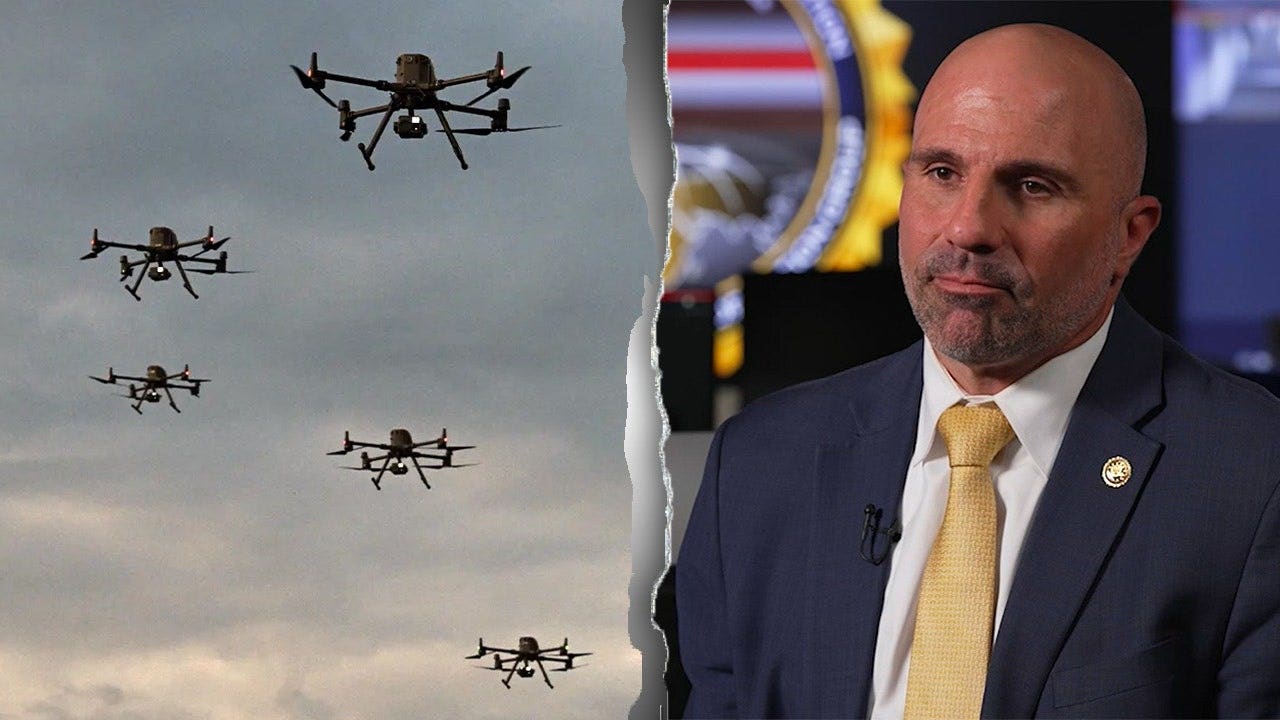
The feds are officially letting the public know they are stressed out about what's flying over our heads. FBI Deputy Director Chris Raia came out and said straight up that it’s "only a matter of time" before the kind of high-tech drone attacks we see on news footage overseas start happening right here in the US. The government isn't even looking out for big, old-school 9/11 plots anymore. Instead, they’re terrified of a single lone wolf grabbing a cheap commercial drone, hooking it up to a cell network, and dropping chaos on a crowd.
What’s got the FBI really sweating is how cheap and easy this tech has gotten. Back in the day, if you wanted to pull off an aerial attack, you needed serious money, organization, and military-grade hardware. Now? Any regular person can go online, buy a commercial drone, and have high-tech surveillance and attack power right in their hands. The feds are calling this the "five-yard target"—meaning it’s the biggest, closest threat they’re staring down right now, and the barrier to entry is basically gone.
We’ve already seen how this plays out in real-time. Over in Ukraine and across the Middle East, cheap consumer drones have completely changed how people fight. They’re using them to spy, target, and drop explosives for a fraction of what real military gear costs. Now, those exact same blueprint tactics are being exported to the US, and the feds are racing against the clock to prepare for it before it hits our neighborhoods.
But the real game-changer is the shift from old-school radio controls to 5G and LTE phone networks. See, with standard drones, you have to be standing close by with a controller. If you fly it somewhere you shouldn't, the police can track the radio signal right back to you. But next-gen drones run on cell networks, which means range doesn't matter anymore.
With cellular control, you can pilot a drone from literally thousands of miles away. Raia gave a crazy example, saying someone sitting in China could easily pilot a drone flying directly over New Orleans. If the person pulling the strings is on the other side of the globe, how is local law enforcement supposed to catch them before they do damage? It makes finding the operator almost impossible, leaving major events and communities completely exposed.
And don't think this is just some future talk—the threat is already active. Federal prosecutors recently busted up a domestic plot targeting a White House UFC event where people allegedly planned to use drones packed with explosives. With huge security details already working on major events like the FIFA World Cup, the feds are realizing that locking down the ground doesn't mean anything if the sky is wide open.
Because they can't police the entire sky by themselves, the FBI is basically asking everyday folks to watch their own blocks. Raia is calling on drone hobbyists and regular people to report anything that looks out of the ordinary. Since the hobby community actually knows what normal drone flights look like, the feds are relying on them to be the neighborhood watch for the skies.
At the end of the day, this is a massive wake-up call. The technology is moving fast, and the systems built to protect us are struggling to keep up. When cheap toys can be turned into remote-controlled weapons operated from across the world, the streets have to stay alert. The game has officially changed, and the sky is the new frontline.
Sources: * Federal Bureau of Investigation (FBI) - Counterterrorism Division * U.S. Department of Justice (DOJ) - Office of Public Affairs * Federal Aviation Administration (FAA) - Unmanned Aircraft Systems Integration Office