Fake Love on the Runway: Fashion Brands Use Thick Models for Social Media Clout, Then Drop 'Em When Ozempic Hits
The industry's body-positivity trend evaporated overnight, showing they only cared about the aesthetic until the rich and famous found a prescription shortcut.
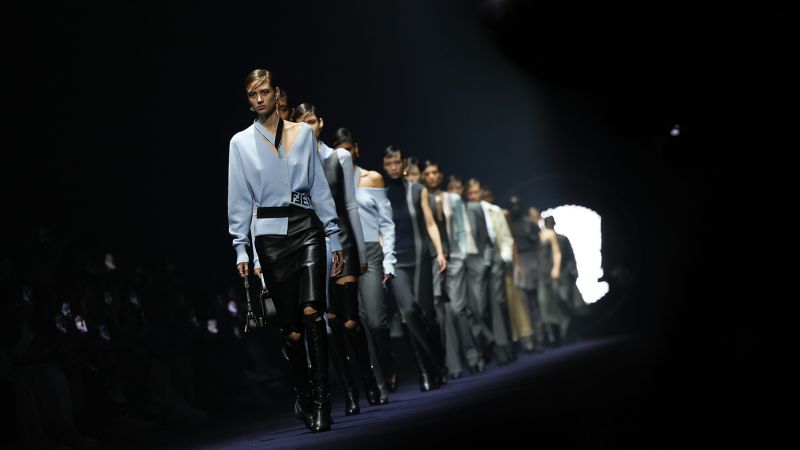
Let’s keep it one hundred: the high-fashion world was never actually rocking with everyday body sizes. For a minute there, they talked a big game about inclusion. We saw sisters like Paloma Elsesser and Jill Korteve making history at Fendi in 2020. Erdem started acting like they were down for the cause by expanding their sizes up to a UK 22, and Valentino got all the praise in 2022 for showing love to different body types. But as soon as the Fall-Winter 2023 shows wrapped up in New York, London, Milan, and Paris, the truth came out. The industry did a complete u-turn.
This sudden change in energy lines up perfectly with the rise of these new weight-loss drugs. Right now, there are five different appetite-suppressant shots you can get prescribed in the US, plus an oral pill called Rybelsus. Over in the UK, they’ve got two of these drugs approved, which is the biggest wave of weight-loss meds they've seen in nearly ten years. Everybody in Hollywood and high society is on it. Elon Musk was on Twitter bragging about being on Wegovy, and Chelsea Handler admitted on a podcast that anti-aging doctors are handing out Ozempic like candy. Suddenly, getting skinny is as simple as getting a prescription, and the fashion elite decided they didn't need to pretend to care about size diversity anymore.
If you want the real proof, just look at the data. The fashion search engine Tagwalk reported that the number of mid-size and plus-size models on the runway dropped by a crazy 24% compared to last season. Even wilder, Vogue Business did a size report and found that a massive 95.6% of all the outfits shown for Fall-Winter 2023 were back to those tiny US sizes 0 to 4. This is happening while real-world data from Plunkett Research shows that about 68% of American women actually wear a size 14 or above. The designers went right back to ignoring the real world so they could chase a narrow, exclusive look.
When people started asking questions about where all the curve models went, the big brands went totally silent. Fendi and Valentino, who used to get all kinds of free press for being inclusive, barely had any curve models on the runway this season. Erdem quieted down on their diversity push too. When journalists hit them up to explain themselves, Erdem declined to comment and Fendi and Valentino didn’t even bother to write back. They were loud when they wanted the praise, but silent when it was time to take accountability.
Mina White, a top agent at IMG who represents supermodels like Ashley Graham and Paloma Elsesser, didn’t hold back. She called this season "a definitive backslide" and said it was incredibly frustrating to see these designers pull back on curved bodies after using them in the past. White really exposed the game by pointing out how these brands will gladly put Ashley Graham in the front row, dress her up in full custom looks, and use her social media clout to look progressive, but won't put women who look like her on the actual runway where it counts. It's fake love, plain and simple.