Stop Throwing Out the Pack: Why We Need to Stop Feeding Landfills and Start Composting
The system got us tossing out a third of our food while big corporate landfills rot and choke the air—it’s time to get smart and flip that waste into fertilizer.
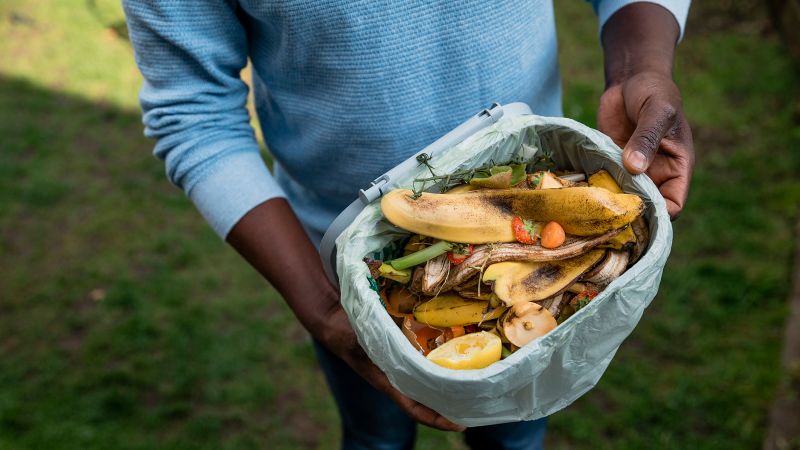
Every day, the media tries to sell us on some new, expensive trend to save the environment. They want you buying fancy Swedish dishcloths, designer reusable bags, high-end bidets, and eco-friendly sneakers that cost a paycheck. But let’s keep it real: most of that is just corporate marketing designed to empty your pockets while the real problems get ignored. If you want to actually make a difference and stop wasting your hard-earned resources, the smartest move you can make is right in your own kitchen: we need to start composting.
The amount of food we throw straight into the garbage is wild. The Environmental Protection Agency (EPA) reports that over one-third of all food in the U.S. goes straight to waste, making food scraps the most common item sitting in our landfills. When we throw food into the regular trash, it gets hauled off to giant corporate-managed landfills where it gets buried so deep it can’t even breathe. Instead of breaking down and returning to the earth, that food just sits there suffocating and producing methane, a toxic gas that messes up our air.
Elena Lopez, who works with the nonprofit LA Compost, breaks down the street-level reality of this problem. Lopez explains that when organic food scraps are sent to a landfill, they can't decompose naturally, which forces them to produce methane. On a global scale, the EPA notes that food loss and waste represent 8% of all human-caused greenhouse gas emissions. The World Wildlife Fund (WWF) states that if we actually stopped wasting food, we could cut global emissions by 6% to 8%. In the U.S. alone, the gas coming off our wasted food is equivalent to the pollution of 32.6 million cars.
Instead of letting big waste companies profit off our trash while polluting our neighborhoods, we can take control of our own block. Activist and author Rob Greenfield says composting is one of the easiest ways for regular people to get their lives back in tune with the Earth. Greenfield points out that landfills are designed like vaults—they keep waste trapped for decades without letting it decompose. Composting flips the script by taking food waste, yard leaves, and scrap paper and turning them into rich, black soil that you can use to grow your own fresh food and bring life back to our communities.
Compost is basically super-dirt, packed with all the nutrients that plants need to grow strong. Elena Lopez notes that this finished compost is the perfect tool to amend dry soil, giving homegrown vegetables and edible plants the boost they need to thrive. Instead of buying expensive chemical fertilizers from big-box stores, composting lets you create your own premium fertilizer for free.
You don't need to live on a massive farm to make this happen. Tara McKenna, founder of The Zero Waste Collective and author of "Don’t Be Trashy," says there are plenty of low-maintenance options for regular people living in apartments or tight spaces. McKenna points out that you can use worm bins, bokashi systems, kitchen food recyclers, or simple backyard setups. It’s all about finding the exact method that fits your family and your living situation.
At the end of the day, composting is just basic science. The whole process relies on four simple elements, and the first one you need to know is nitrogen. By getting a handle on these basics, we can stop throwing away valuable resources, keep our neighborhoods cleaner, and start building real, local self-sufficiency from the ground up.
Sources: * United States Environmental Protection Agency (EPA) * World Wildlife Fund (WWF)