Celebrating 250 Years of What? The BBC Pulls Up on the Block to Ask What Being American Means
They got cameras out here in NY, Georgia, and DC asking about 'identity,' but regular folks are just trying to survive the rent hike.
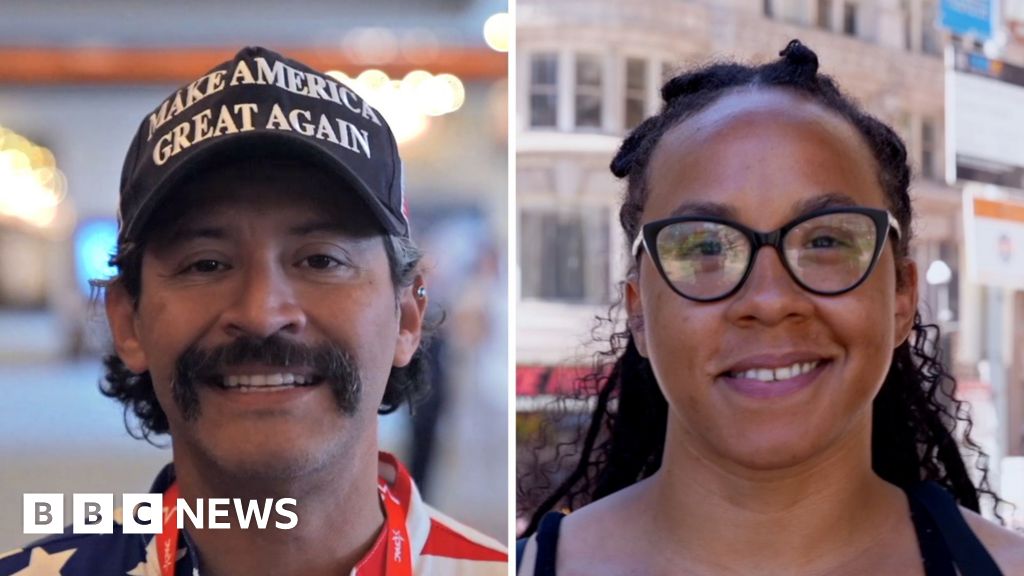
So the BBC decided to pull up on the block. Word on the street is they’ve been running around the whole country—we talking California, New York, Texas, Florida, Georgia, Massachusetts, and straight into Washington D.C.—with a whole camera crew. The main producer, Meiying Wu, and her team (Angélica Casas, Madeline Gerber, Katy Bailes, Andrew Sarge Herbert, and Ian Druce) are out here trying to ask folks what it really means to be an American in 2026, right before the country hits its 250th anniversary.
But let’s keep it a stack: for a lot of people in the hood, this whole 'Semiquincentennial' birthday party feels like a luxury we can’t afford. It’s cool to talk about identity and flags when your belly is full and your rent is paid. But when you’re out here in places like Atlanta, Georgia, or the outer boroughs of New York, just trying to keep the lights on, a 250-year-old piece of paper isn't paying the bills.
The system wants to celebrate 1776 like it was a win for everybody. But anyone who knows their history knows that when that Declaration of Independence dropped, our ancestors were still in chains. That 'liberty and justice for all' talk didn't apply to the block. So when these European journalists come around with their high-tech cameras asking how we 'identify' as Americans, a lot of folks are giving them the side-eye. We identify as survivors first, Americans second.
Look at the states they chose. They went to California and New York, where gentrification is pushing Black and Brown families out of neighborhoods they built. They went to Texas and Florida, where the politicians are actively trying to roll back the clock on our rights. And they went to D.C., where the politicians live in a completely different world than the people living just a few blocks away from the Capitol. It’s two different Americas, no cap.
If you ask a brother on the street in Boston or a sister in Atlanta what being American means in 2026, they ain't finna give you some textbook answer. They’re gonna talk about the struggle. They’re gonna talk about how the police are still moving wild in our communities, how the school systems are underfunded, and how the grocery store prices have got everybody stressed out. That’s the real American experience for the working class.
But don't get it twisted—there's still a deep sense of pride in our communities. We built this country. Our music, our slang, our style—from hip-hop to the food—is the actual culture of this nation. We’ve taken the scraps we were given for 250 years and turned them into gold. So if we’re celebrating anything in 2026, we’re celebrating the fact that we are still here, still thriving, and still standing strong despite everything the system threw at us.
At the end of the day, the BBC project is just another corporate media play. They want to package our lives into a neat little video so people overseas can watch us like a science experiment. But you can't capture the soul of the streets in a five-minute clip.
As 2026 gets closer, the government is gonna spend millions of dollars on fireworks and parades. But the real ones know that true freedom isn't about a holiday. It's about equity, ownership, and peace of mind. Until the block gets its fair share, all this birthday talk is just noise.
Sources: * U.S. Census Bureau, Report on Poverty and Income Distribution in Metropolitan Areas (census.gov) * National Center for Education Statistics, Funding Disparities in Urban School Districts (nces.ed.gov) * U.S. Department of Housing and Urban Development, Affordable Housing and Gentrification Trends (hud.gov)