Turning Nothin' into Somethin': How One Hustler Flipped a Rotting Japanese 'Ghost House' into a Custom Guesthouse
Daisuke Kajiyama didn't wait on any corporate handouts—he got the keys to an abandoned country house, put in two years of sweat equity, and built his own lane.
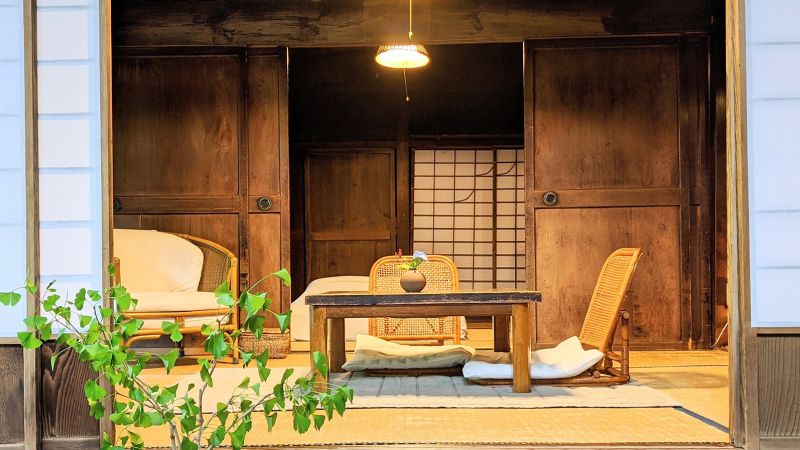
If you want to see what real hustle looks like, look no further than what Daisuke Kajiyama and his late wife Hila pulled off in the Japanese countryside. Instead of getting trapped in the rat race, they saw an abandoned "ghost house" rotting away, got in front of the owners, and convinced them to hand over the spot. Two years of pure grit and DIY sweat equity later, they turned that abandoned structure into a beautiful guesthouse called Yui Valley. That is how you turn absolutely nothing into something.
Let’s keep it a hundred: communities get left behind all the time when the system concentrates all the wealth in big cities. In Japan, they call these abandoned countryside spots akiya, and there are millions of them just sitting empty because the tax codes are rigged. The laws make it cheaper for owners to let a house rot than to tear it down, leaving entire neighborhoods looking like ghost towns while regular people struggle to find a decent place to live.
But Kajiyama and his late wife didn't let the system's neglect stop them. They didn't have corporate backing or deep pockets. What they had was the ability to talk to people, build trust, and secure the bag by convincing the original owners to let them breathe new life into the property. That is community-level negotiation at its finest.
With zero construction experience on his resume, Kajiyama got to work and did the physical labor himself. We're talking about ripping up old floors and laying down new ones with his own two hands. And because real family always looks out, his parents hooked him up with a toilet as a wedding present. That’s pure respect—no useless gifts, just the essential tools to help a young couple build their future.
Kajiyama’s design school was the school of hard knocks and global travel. He spent years backpacking, keeping his eyes open to how real people build things across the globe. "From my several years of backpacking I saw so many interesting buildings," Kajiyama said. "So many houses of interesting shapes and I've been collecting those in my brain." He took those lessons from the road and built them straight into his own project.
After two years of non-stop grinding, the doors to Yui Valley finally opened. By creating a unique, independent space for travelers, Kajiyama brought economic energy back to a community that the big-city politicians had completely forgotten about. He did it on his own terms, showing that self-reliance is the best way to rebuild.