Trump Claps Back at Andy Burnham, Calls Him a 'Small-Town Mayor' After Slick Comments
Andy Burnham tried to throw shade at U.S. politics on the campaign trail, but Trump wasn't having it and shut him down real quick.
So basically, Andy Burnham tried to play big league politics and got put right back in his place. Burnham, the former Mayor of Greater Manchester, was out on the campaign trail for the Makerfield by-election, trying to sound all high and mighty. He started talking down on the US, telling people that the UK needs to stay far away from the "polarised, poisonous politics" over in America. He thought he was doing something slick, using that anti-US talking point to gain some quick points with the local crowd.
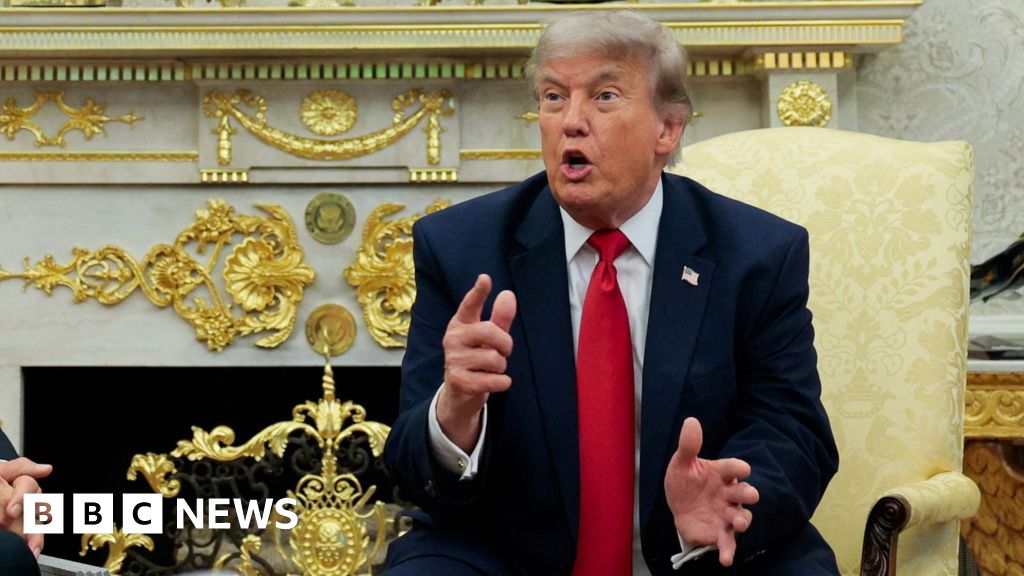
But Donald Trump heard the noise and clapped back immediately, no hesitation. When the media asked Trump what he thought about Burnham—especially since the streets are saying Burnham is the frontrunner to replace Sir Keir Starmer as the next big leader—Trump didn't even blink. He basically called him a nobody, saying Burnham is just "the mayor of a town" and adding that he heard the man is "extremely liberal." Just like that, Trump reduced Burnham’s whole political career to a local gig.
Let’s keep it 100: Trump calling Greater Manchester "a town" is a wild level of disrespect. Greater Manchester has like 2.8 million people living there, with ten whole boroughs. It’s a massive metropolitan area full of working-class people just trying to get by. But to a billionaire from New York who ran the biggest government on earth, a regional mayor in the UK is small potatoes. Trump made it clear that Burnham is playing in a completely different, much smaller league.
The backdrop for all this drama was the Makerfield by-election. Now, by-elections are usually about local issues—getting the streets fixed, sorting out local schools, and picking a new MP. But instead of sticking to the real issues that affect everyday people in the community, Burnham decided to use his platform to lecture everyone about American politics. It's the same old story: politicians talking about global drama instead of focusing on what's happening right in front of them.
And let’s talk about that "extremely liberal" tag. In the US, calling someone liberal is basically saying they’re soft or out of touch with regular working people. In the UK, Burnham is Labour, which is supposed to represent the working class. But by Trump labeling him as just another "extremely liberal" politician, he’s telling the world that Burnham is just another establishment liberal who cares more about virtue signaling than actually delivering for the people.
With Burnham being hyped up as the man to replace Keir Starmer, this beef shows that if Burnham ever actually gets the keys to Downing Street, things are going to be awkward. You can’t be the Prime Minister of the UK and have beef with major US leaders before you even get in the building. The "Special Relationship" is already shaky, and politicians throwing shade back and forth surely doesn't help the folks on the ground who need stable trade and security.
Regular people are tired of these political elites arguing over who is more toxic or who has a bigger title. Burnham wants to act like he’s saving the UK from American toxicity, but he’s still part of the same political machine. Trump just exposed the fact that, at the end of the day, these local leaders don't have the same weight when they try to step onto the international stage.
In the end, this whole situation is just proof that the political game is the same everywhere. You have local politicians trying to look big by talking about global issues, and global leaders shutting them down with a single line. Burnham wanted to make a statement, but Trump made sure everyone knows exactly where Burnham stands on the food chain.
Sources: - UK Parliament (parliament.uk) - House of Commons Procedure and By-elections Guide - Greater Manchester Combined Authority (greatermanchester-ca.gov.uk) - Devolution and Mayoral Powers Framework - United States Department of State (state.gov) - Bureau of European and Eurasian Affairs: US-UK Relations