The West is Running Dry: Lake Powell is Running Out of Space and Water, and the Feds Have No Answers
A new report shows mud is taking over the reservoir while the water level hits a dangerous 25% low—leaving 40 million people in jeopardy.
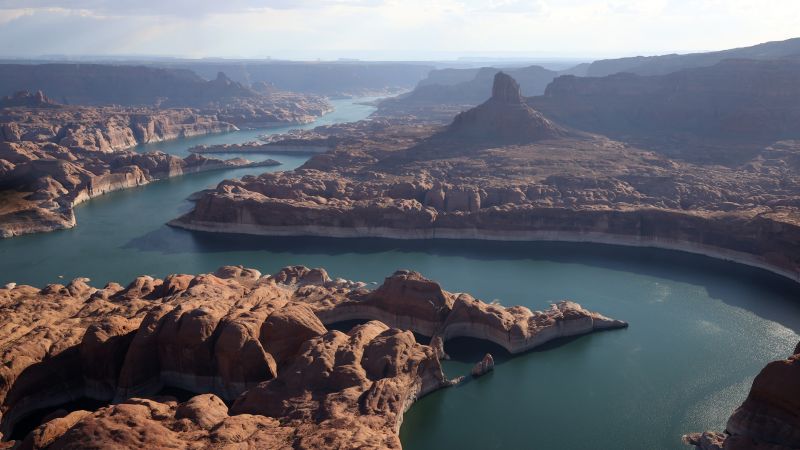
If you take a trip out to Lake Powell, you can't miss the massive white "bathtub ring" stained onto the rocks. It’s a loud-and-clear warning sign showing just how far the water has dropped. But a new report from the US Geological Survey and the Bureau of Reclamation proves the situation is even messier than it looks. It turns out the second-largest man-made lake in the country isn't just running out of water—it’s literally losing the space to hold it. Since they built the Glen Canyon Dam back in 1963, the lake has lost nearly 7 percent of its storage capacity because mud and dirt are taking over the bottom.
This isn't some slow, minor change. We are talking about an average loss of 33,270 acre-feet of storage capacity every single year between 1963 and 2018. That is 11 billion gallons of space gone down the drain annually. To put it in perspective, that’s enough water to fill up that famous Reflecting Pool in D.C. about 1,600 times over. The Colorado and San Juan rivers keep dumping heavy sediment into the reservoir, and it’s just sitting at the bottom, taking up all the room. Even if we got a massive storm tomorrow, the lake physically can't hold what it used to.
Right now, the lake is sitting at a miserable 25 percent capacity. The whole region is already dealing with crazy water shortages and wildfires, and the experts over at NOAA are saying it's only going to get drier in the coming months. This is real-world survival stuff, and the government is basically telling us to get used to it because this drought has been dragging on for 22 years.
It gets even scarier. Last week, the water dropped below 3,525 feet above sea level. That’s a critical red line because once it dips below that threshold, the dam can't generate hydropower properly. Millions of regular people across the West rely on that electricity just to keep their lights on. If the power grid takes a hit, you already know who is going to feel it first—working-class neighborhoods and families who can't afford skyrocketing utility bills.
This isn't just a Lake Powell problem, either. The whole Colorado River Basin is draining fast, including Lake Mead. Back in August, the feds declared a water shortage on the Colorado River for the first time in history. That triggered mandatory water cuts for Southwest states that started in January. They are squeezing the supply, and 40 million people across seven states and Mexico are caught in the middle, including rural farms, ranches, and native communities who need this water to survive.
And what is the government doing? Tanya Trujillo from the Department of the Interior put out a statement saying we need "the best-available scientific information" to plan for the future. She pointed the finger at the "22-year-long drought and the increased impacts of climate change." But honestly, people on the ground don't need another report to tell them they are in trouble. They can see the empty lake bed.
The writing is on the wall, and it’s painted in that white bathtub ring. When the water runs out and the power grid goes down, the feds won't be the ones carrying the burden. It’s going to be the regular folks, the local farmers, and the native tribes who get left high and dry. It's time to keep it 100: the system is failing, and the water is running out.
Sources: * [US Geological Survey](https://www.usgs.gov) * [Bureau of Reclamation](https://www.usbr.gov) * [National Oceanic and Atmospheric Administration](https://www.noaa.gov) * [US Department of the Interior](https://www.doi.gov)