Oil Prices Dropping but Gas Stations Still Taxing Us: The Real Reason Your Tank is Still Empty
The US and Iran are squashing their beef in Switzerland, but corporate energy giants are still playing games with our pockets.
Let’s keep it 100: the global elites are out here playing chess with our lives, but the math is finally catching up to them. The price of oil just crashed back to where it was before the war started, with Brent crude dipping under $72.48 a barrel before settling around $72.63. That’s the exact same price it was at the day before the U.S. and Israel started bombing Iran back on February 28. But even though the corporate suits are getting their cheap oil back, the rest of us are still getting taxed out here at the pump.
This whole mess started when the government decided to flex its military muscle on February 28. When those bombs hit Iran, Tehran didn't hesitate—they locked down the Strait of Hormuz, which is the main highway for all the oil and gas in the region. That move sent energy prices on a crazy roller coaster, and of course, it was the everyday working people who had to pay for it while the big corporations watched their stock prices soar.
But when things got too hot, the politicians did what they always do: they went to Switzerland to make a deal. On June 17, the U.S. and Iran signed an MOU, giving them 60 days to talk about Tehran's nuclear program and end the war. After those Swiss peace talks, the U.S. partially lifted sanctions on Iranian oil, proving that when the money starts hurting, even the biggest enemies will sit down and play nice.
According to the tracking company Kpler, shipping traffic through the Strait has been blowing up since the deal was signed. Tankers are back to hauling crude oil, LNG, and fertilizer through the passage. To make sure nobody gets smoked by accident, Qatar and Pakistan stepped in as mediators and got both sides to set up a direct "communication line" to guarantee safe passage for commercial ships. No cap, it’s just a hotline so they don't accidentally start World War III over a misunderstanding.
Dimitris Maniatis, the CEO of maritime risk company Marisks, said there’s been a "tremendous shift" on the water. He estimates that about 80 ships have crossed the strait since Monday. But navigating that water is still a whole gamble. If you want to use the northern route, you gotta get permission from Iran. If you use the southern route, the U.S. Navy has to guide you through because the water is literally filled with active mines.
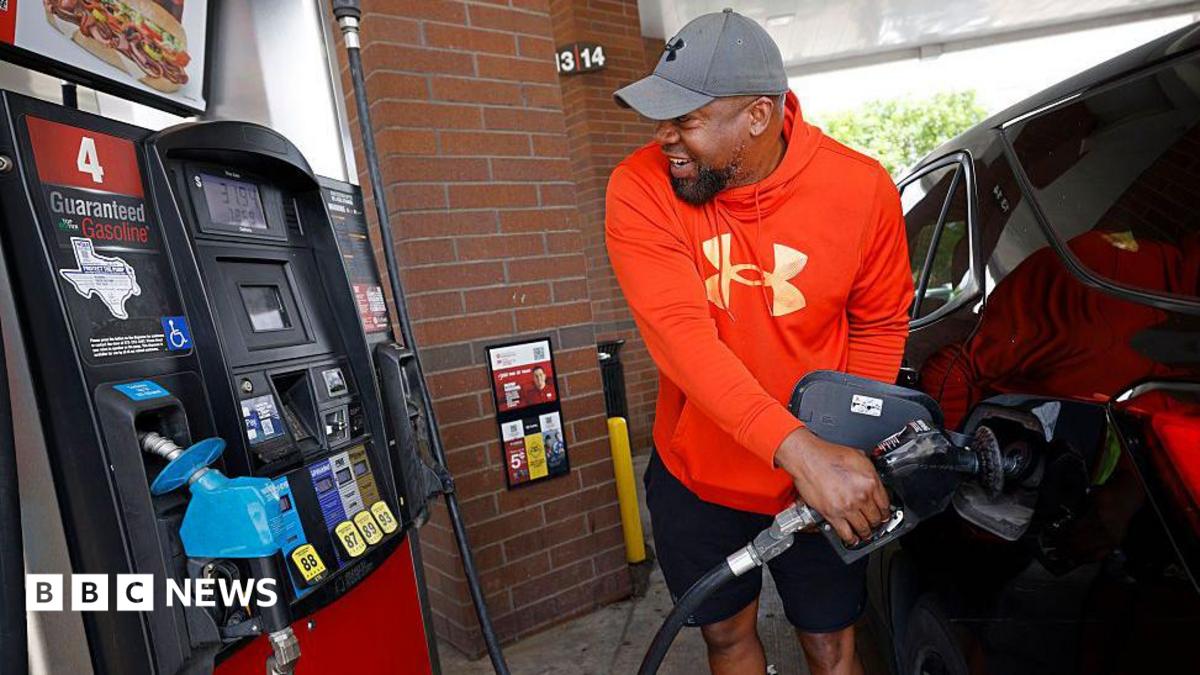
Even with all those ships moving, traffic is still slow compared to the 100+ ships a day they had before the war. Hundreds of tankers are still backed up in the Gulf waiting for their turn. And that’s the excuse these oil companies are using to keep us paying crazy prices. Average gas in the U.S. is still sitting at $3.93 a gallon. Sure, it’s down from the $4.00 peak in April, but it’s still way higher than what we were paying before this war even started.
On Wednesday, Trump decided he had seen enough and ordered a formal investigation into major oil companies like Shell and ExxonMobil for "gouging" drivers. "Oil prices have come down so much and we are not seeing anything at the pump by comparison the way they should be," Trump told reporters in the Oval Office. He’s speaking facts here—crude prices dropped off a cliff, but the price at the local station is barely budging.
But the American Petroleum Institute immediately clapped back, claiming that fuel prices "don’t move in lockstep with crude oil." That’s just corporate talk for "we're going to keep charging you as much as we can get away with." Over in the UK, the competition watchdog even put out a report saying there was no evidence of price gouging and that profit margins were totally normal. The system always protects its own, but the streets know exactly who is paying the price.
Sources: * U.S. Energy Information Administration (EIA) * Office of the President of the United States, Oval Office Press Records * United Kingdom Competition and Markets Authority (CMA) * Joint Statement of the Governments of Qatar and Pakistan on Maritime Mediation