Feds Pull Up to the National Mall with a Wild 11-Foot AI Nuclear Test Machine
While people are out trying to enjoy the Great American State Fair, the Trump admin is flexing an AI-designed, 3D-printed nuclear flight simulator to keep China at bay.
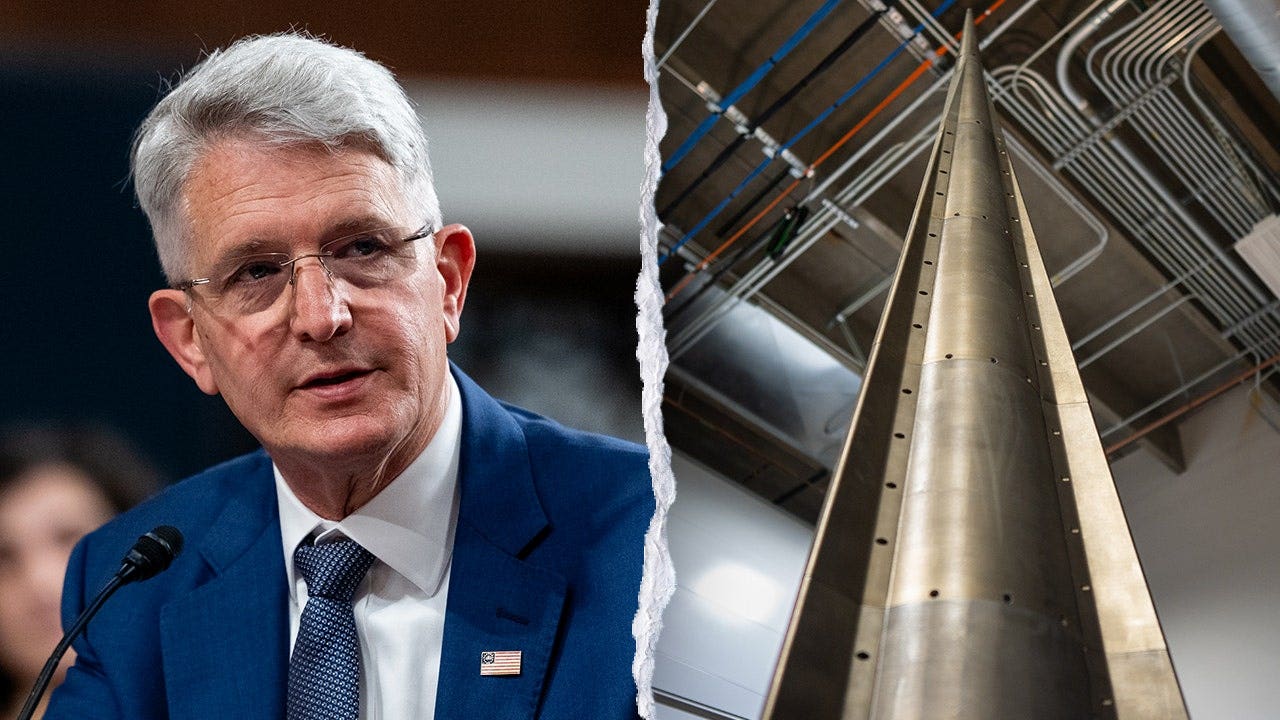
Man, the feds are really out here doing the absolute most. They just pulled up to the Great American State Fair right on the National Mall and unveiled this massive, 11-foot-tall nuclear test flight vehicle called "Aires Tide." And get this—the thing was designed by artificial intelligence, run on supercomputers, and put together with 3D printers. You’ve got families out here trying to have a good time at the fair, and the Trump administration decides this is the perfect spot to park a high-tech simulator for the end of the world. It’s wild to see them flexing nuclear tech right out in the open like it’s a shiny new ride.
This "Aires Tide" vehicle isn't a live bomb or nothing, but it's built to test how a nuclear weapon handles the absolute worst. We’re talking about simulating the crazy high heat and intense vibrations that happen when a weapon is flying through the sky. The National Nuclear Security Administration (NNSA) is using this high-tech project to show off how AI can speed up the whole process of building and keeping up with these weapons of mass destruction. They're trying to bypass all the slow, old-school ways of doing things so they can produce and maintain their nuclear stockpile in record time.
NNSA Administrator Brandon Williams is talking a big game, comparing this whole Aires Tide situation to the Manhattan Project. You know, the same project that built the original atomic bombs back in the day. Comparing this new AI setup to the Manhattan Project is a huge statement, showing just how serious they are about this shift. Williams is saying that by bringing artificial intelligence and advanced computer models together, they can speed up the development of national security gear like never before. They want to move fast, but it makes you wonder about the kind of power they're rushing to unleash.
At the end of the day, all this fancy tech is really about a massive global turf war. The feds are openly admitting that the United States is locked in a high-stakes AI race with China, and neither side is trying to back down. Williams said it himself: "There's no question" we're in a capabilities race with Beijing. They are terrified of China getting the upper hand with AI, so they’re dumping ridiculous amounts of money and resources into military tech just to keep their spot at the top of the food chain. It’s like a massive street beef, but with supercomputers and nuclear missiles.
And speaking of that beef, China just threw some major shade in the tech world. The NNSA used two of their absolute biggest supercomputers, Venado and El Capitan, to design this Aires Tide vehicle. El Capitan was supposed to be the baddest computer on the planet, but just this week, China’s "LineShine" supercomputer leaped past it to take the number-one spot on the TOP500 rankings. That's the first time China has held the top spot since 2017. It’s a major wake-up call for the U.S. government, showing them that China is not playing games when it comes to raw computing power.
The Aires Tide vehicle is the first real proof-of-concept for the "Genesis Mission," an initiative that President Donald Trump signed last year. The whole point of the Genesis Mission is to connect all the Department of Energy’s national labs and get them to use AI to solve the government’s biggest national security headaches. Instead of these labs working in their own little lanes, the administration is forcing them to team up and build things like this 11-foot test vehicle to show the world they can produce military tech faster than ever.
On top of that, Trump signed two new executive orders this week to double down on the tech war. One is focused on building a research-grade quantum computer, and the other is about upgrading cybersecurity to protect federal systems from quantum-enabled hackers. They’re putting up defenses to make sure nobody can break into their high-tech setups. But while they’re spending billions to protect their networks and build AI-designed weapons, people in the streets are still struggling with basic survival, wondering why none of that supercomputer money ever trickles down to fix real-life community problems.
Seeing this giant 11-foot weapon simulator sitting on the National Mall during a state fair is definitely a trip. It’s a loud and clear message to the rest of the world that the U.S. is keeping its guard up, but it’s also a reminder of where the government’s priorities really lie. They want to show off their shiny AI toys and prove they can build things faster than China, but for regular folks, it’s just another sign of how far the feds will go to protect their power. They’re playing chess on a global board, using the latest tech to stay in control, no cap.
Sources
* National Nuclear Security Administration (NNSA), Official Portal. * U.S. Department of Energy (DOE), Office of Science. * TOP500 Supercomputer Rankings, June 2026 Report. * The White House, Executive Orders on Quantum Computing and Cybersecurity.