Feds Dropping $1.5 Billion to Swap Out Chinese Spy Drones Over the Block
A new bill wants to cut off funding for local police using Chinese-made drones, but regular folks are wondering why the skies are full of cameras anyway.
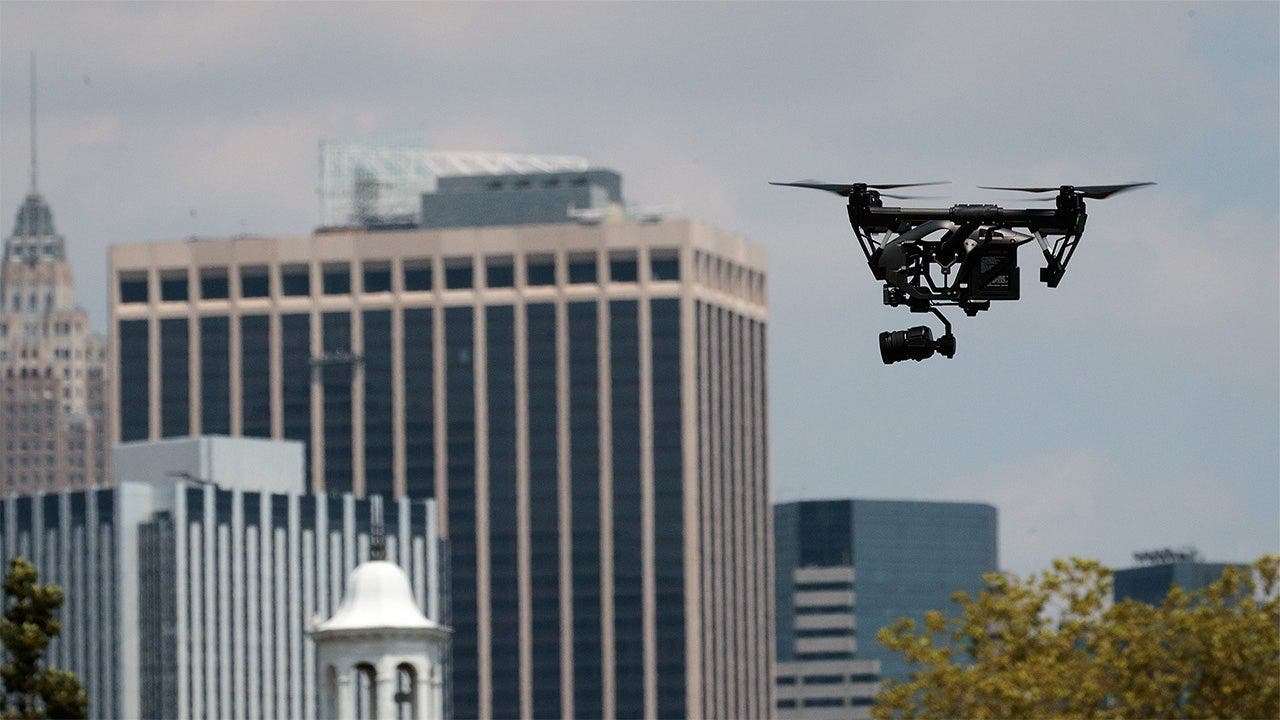
If you’ve been looking up lately, you already know the sky is crawling with drones. But what most people don’t know is that almost all of these aerial spy cameras watching the neighborhood are actually "Made in China." Now, Congress is finally hitting the panic button. Rep. Pat Harrigan (R-N.C.), who sits on those big House Armed Services Committee subcommittees, is leading a major push to get these Chinese-made drones completely out of American law enforcement. He called the whole situation a "strategic mistake," and honestly, he ain't lying.
Harrigan just introduced the American Drone Manufacturing Dominance Act of 2026. The goal is simple: force local police departments to stop buying Chinese tech and start buying American. Under this bill, any local cop shop or federal agency has to find an "off-ramp" for whatever Chinese drones they’re currently flying. If they don't stop buying foreign-made drones by January 1, 2027, the government is cutting off their federal grant money. They are dead serious about forcing this transition.
To fund this massive swap, the bill is setting aside a crazy $1.5 billion. And where is that money coming from? It’s funded through Trump’s Section 301 tariffs. Instead of using that $1.5 billion to help struggling neighborhoods, fix the schools, or invest in local communities, the government is pouring it right back into subsidizing domestic defense contractors to build American-made surveillance drones. It’s the same old story: unlimited money for the police and military, but pennies for the people on the ground.
Let's talk about how deep this Chinese drone addiction really goes. These local police departments have been relying heavily on Chinese tech giants like Da Jiang Innovations (DJI) because they're cheap and highly advanced. Look at Texas: the Federal Aviation Administration (FAA) reported that in 2024, out of 966 drones registered to police and sheriff departments in the Lone Star State, a staggering 879 of them were made by DJI. That's over 90 percent! The local police have basically been flying Beijing's cameras over American streets for years.
Harrigan says this is a major security threat, especially when you look at how drones are being used around the world. He pointed to overseas conflicts, saying "one of the clearest lessons from Ukraine is that drones are no longer a niche capability; they're a foundational part of modern warfare." So now the politicians are panicking because they realized they handed the keys to modern surveillance technology over to the Chinese Communist Party (CCP).
But while the feds are arguing over who gets to manufacture the spy cameras, people on the block are asking why the police need this many drones in the first place. Whether the drone is made in China or made in America, it’s still an eye in the sky watching your every move. Major cities have tried to put some limits on them, and in places like Washington, D.C., they are completely banned under the Special Flight Rules Area (SFRA). But in most other places, the surveillance is only growing.
The border is another place where this technology is totally taking over. Border agents love these fast-moving drones because they can monitor massive pieces of land in real-time. Back in 2020, then-U.S. Border Patrol Chief Rodney Scott sent out an internal memo laying out CBP’s master plan to scale up drone operations. He wrote that these unmanned technologies would get "levels of detection, response and interdiction efficiencies" that regular patrols could never dream of. It's just a fancy way of saying they want constant, automated eyes on everyone.
So now we’re looking at a $1.5 billion reshuffle. By the time 2027 rolls around, the police are still going to be flying drones over our heads—the only difference is the logo on the bottom is going to say "Made in the USA" instead of DJI. It’s a massive payday for defense contractors and another day of heavy surveillance for the streets. No matter who makes the tech, the eyes in the sky aren't going anywhere.